
Noria’s Journey: From Emotional Distress to Economic Independence
In the remote village of Mandi, in Parun District of Nuristan Province, 27-year-old Noria’s life has been shaped by hardship, resilience, and ultimately transformation. Her story reflects the realities faced by many women and girls in rural Afghanistan—where economicvulnerability, social restrictions, and emotional distress intersect—while also demonstrating how timely psychosocial support combined with vocational s
kills training can restore dignity, confidence, and hope.
A Life Marked by Hardship
Noria’s challenges began with a personal decision that should have brought joy. She married the man by her choice, but her parents strongly opposed the marriage, leaving her emotionally isolated from her family of origin. What followed was a period of growing hardship. Living with her in-laws, Noria experienced emotional neglect, with little freedom or support.
Despite these difficulties, Noria and her husband managed to build a modest but stable life—until the political changes of 2021 abruptly altered their circumstances. Her husband lost his government job overnight, eliminating the family’s only source of income. With several young children to care for and no financial security, the household quickly fell into distress.
The pressure of unemployment and poverty strained their relationship. Frequent arguments became common, and at times escalated into physical violence. Even basic requests for food or household necessities often triggered disputes. “I felt trapped,” Noria recalls. “There was no money, no support, and no way out.”
Over time, the emotional toll became overwhelming. Noria suffered from persistent headaches, loss of appetite, anxiety, and deep sadness. She found herself losing patience with her children, which only increased her sense of guilt and worthlessness. “I felt like I had failed as a mother and as a wife,” she says. “No matter how hard I tried, I couldn’t change our situation.”
Finding Support Through Psychosocial Counseling
Noria’s turning point came when she learned about a Psychosocial Counseling Center established in her village by the Organization for Human Relief (OHR). The center offered professional counseling services for women experiencing emotional distress, family conflict, and economic hardship. Hesitant but desperate for help, Noria decided to attend.
On June 10, she participated in her first counseling session. For the first time in years, she felt listened to without judgment. Through regular sessions, OHR’s trained counselors helped Noria understand the sources of her stress and develop coping strategies to manage anxiety, emotional exhaustion, and conflict at home.
Importantly, the counseling process went beyond emotional healing. Together with her counselor, Noria explored practical solutions to address the root cause of many of her struggles: the lack of income. It became clear that without economic independence, the cycle of stress, conflict, and vulnerability would continue.
Building Skills, Restoring Confidence
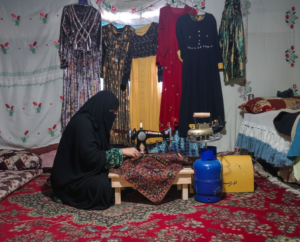
As part of OHR’s integrated approach, Noria was assessed for participation in vocational skills training. Based on her interests and aptitude, she was enrolled in OHR’s tailoring training program focused on sewing local traditional clothing—an income-generating skill well suited to the cultural and market context of Nuristan.
The training marked a significant shift in Noria’s life. Over the course of the program, she learned practical tailoring techniques, pattern-making, and garment finishing, while also receiving mentoring and encouragement. What began as a new skill soon became a source of confidence and pride.
Upon completing the training, Noria began sewing clothes from her home, taking small orders from neighbors, relatives and community members. Gradually, her work gained recognition in the neighborhood and community, and demand increased. The income she earned allowed her to cover basic household expenses, easing financial pressure and reducing tension within the family.
“I never imagined that I could be the one supporting my family,” Noria says. “Now I can contribute. I feel useful. I feel strong.”
A Path Toward Independence and Empowerment
The impact of Noria’s progress extended beyond finances. With a stable source of income and renewed self-confidence, her relationship with her husband began to improve. The stress that once fueled conflict diminished, and cooperation replaced resentment. Noria also noticed positive changes in her children, who now experienced a more stable and supportive home environment.
Today, Noria views herself not as a victim of circumstances, but as an independent and capable woman. She continues to run her home-based tailoring work and has set new goals for the future. Her ambition is to open a small tailoring shop where she can expand her business and train other women and girls facing similar hardships.
“I am deeply grateful to OHR for standing by me in my darkest moments,” she says. “Through counseling, I healed. Through skills training, I found my strength again. Now I want to move forward and help others do the same.”
A Model of Integrated Empowerment
Noria’s story highlights the powerful impact of combining psychosocial support with vocational skills training. By addressing both emotional wellbeing and economic vulnerability, OHR’s approach enables women and girls to rebuild their lives with dignity and resilience.
At OHR, stories like Noria’s reaffirm our commitment to empowering women through holistic, community-based interventions. Her journey demonstrates that when women are given the right support, skills, and opportunities, they can overcome adversity, strengthen their families, and contribute meaningfully to their communities.