OUR WORK
Centering dignity • Advancing equity • Transforming lives
Since 2013, Organization for Human Relief (OHR) has completed community-driven projects across Nuristan, Bamyan, Samangan, Nangarhar, Kunar, Khost and Zabul provinces of Afghanistan in partnership with national and international donors. We have reached thousands of women, men, youth, and vulnerable households with practical support that strengthened resilience and restored hope.
We have worked at the intersection of emergency assistance, protection and sustainable development — ensuring that every intervention not only addressed urgent needs but also built long-term community capacity.
Below are key areas where we have delivered measurable results:
- Gender Justice & Women’s Empowerment
We implemented women’s economic empowerment and rights-based initiatives. We delivered vocational skills training programs including tailoring and embroidery training for local women, supported market linkages, and facilitated awareness sessions on women’s rights and leadership in partnership with UN Women and Women’s Peace and Humanitarian Fund (WPHF) in Nuristan province. 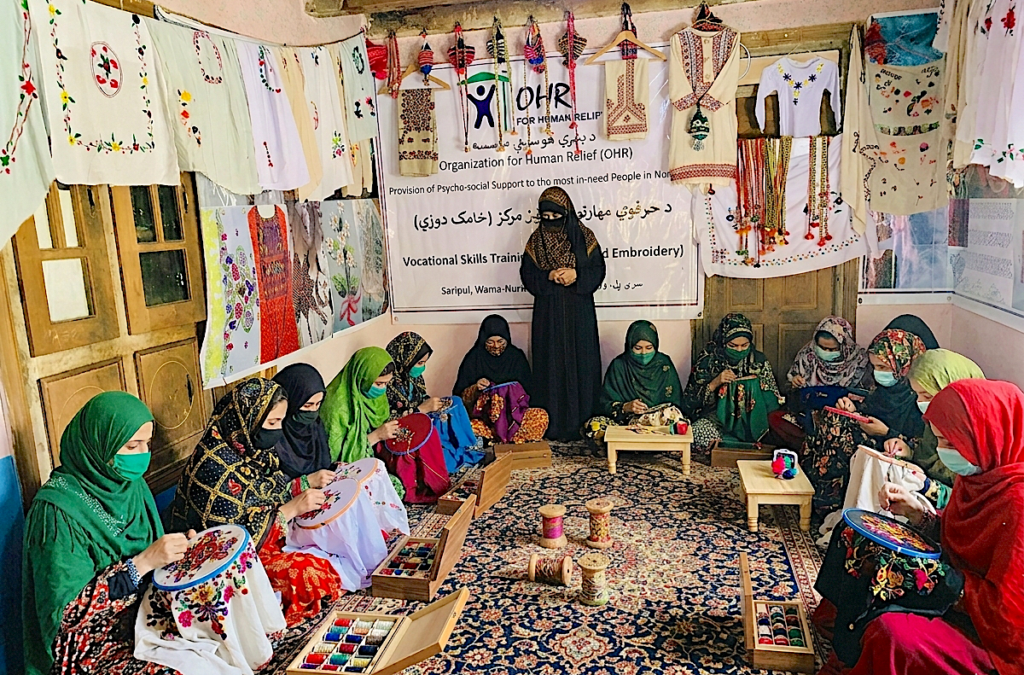
We have also improved access of women to legal services through “Improving Access to Legal Services” project funded by Search for Common Ground in Samangan and Bamyan provinces.
Through multiple initiatives, women gained vocational skills, increased household income opportunities, and strengthened their participation in community decision-making processes. Our interventions also addressed harmful practices through awareness raising of over 100,000 people, advocacy and engagement, and promoted safer, more equitable spaces for women and girls.
- Psychosocial Support & Protection
Under the project “Provision of Psycho-social Support to the Most In-Need People in Nuristan” and other initiatives, implemented in partnership with UN Women, Amna RefugeeHealing Network and RTI International,OHR provided structured psychosocial support services to over 2,600 crisis-affected women and men in Nuristan.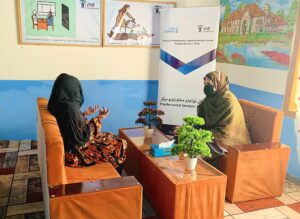
We delivered trauma-informed counselling sessions, established safe spaces, and strengthened referral pathways for survivors of violence and vulnerable women. Participants reported improved coping mechanisms, emotional stability, and renewed community engagement, as a result of the interventions.
Protection mechanisms were established within local communities, and support for women’s protection was mobilized through active engagement with traditional leaders and community structures.
- Humanitarian Response & Resilience
We distributed food packages and essential non-food items to 500 vulnerable households in Nuristan province, prioritizing female-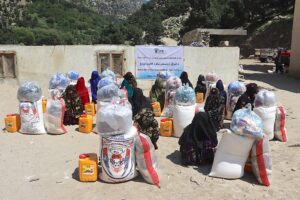 headed households, GBV survivors, persons with disabilities, and families affected by economic shocks. The intervention reduced immediate food insecurity and strengthened community resilience during crisis periods.
Underground irrigation canals were rehabilitated in Khost province, and local roads were constructed in Zabul province to improve livelihood, agriculture and transportation as quick impact actions under the UNDP funded “Area-based Approach for Development Emergency Initiative (ABADEI)” and “Afghanistan Local Economic Development (ALED II)” projects.
- Education, Youth & Capacity Strengthening
Through the “Women’s Voice and Leadership” program in partnership with The Asia Foundation and funded by Global Affairs Canada, OHR supported women’s and girls’ access to education in Kunar.
In Bamyan and Samangan provinces, through the “Strengthening Social Cohesion in Afghanistan” project implemented by OHR in partnership with Search for Common Ground, we established mediation committees and strengthened their skills to resolve community disputes and enhanced local conflict resolution mechanisms.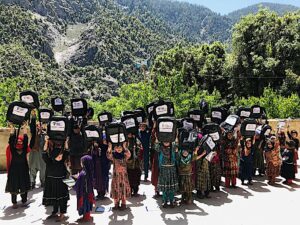
In Nuristan, school supplies were distributed to 18,000 girl and boy students and capacity of local CSOs, and community leaders was strengthened under the UN Women and Women’s Peace and Humanitarian Fund (WPHF) funded projects. A provincial level women CSOs network, two district level committees, and 40 community support groups have been established and their capacities built in Nuristan.
In Nuristan, community mobilization and advocacy was made for access to health under the “Afghan Civic Engagement Program (ACEP)” in partnership with Training Human Rights Association for Afghan Women (THRA) and Counterpart International and funded by USAID in Nangarhar province.
Community social cohesion networks established, and capacities of youth and community leaders was strengthened under the “Promotion of Peace and Social Cohesion” projects in Khost and Zabul provinces.
- Health, Wellbeing & Nutrition
Across multiple projects, OHR implemented integrated health and wellbeing interventions combining emergency treatment, 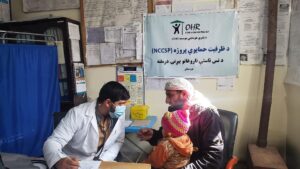 psychosocial support, hygiene promotion, and community awareness, funded by United Nations Development Programme (UNDP), UN Women and Amna Refugee Healing Network. We delivered hygiene awareness sessions to 1,200 people, distributed hygiene kits to 2,200 households, and supported emergency treatment for 1,430 children affected by diarrhea, and reaching over 2,600 women and men for their mental health improvement.
Our initiatives improved knowledge on disease prevention, and mental wellbeing. By linking awareness sessions with practical service delivery and referrals, we strengthened local health-seeking behaviors and improved access to essential services for vulnerable populations.
- Livelihoods & Environment
Through community-based programming, OHR supported climate-sensitive livelihoods and resilience-building initiatives that linked food security with sustainable practices.
We integrated livelihood recovery, and community preparedness approaches to ensure that vulnerable households not only met immediate needs but also strengthened long-term economic and environmental stability.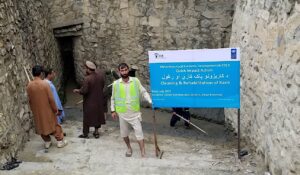
Emergency food packages were distributed to 500 women-headed and conflict-affected households. In addition, sustainable income-generation opportunities were established through vocational skills training, with 300 women trained in tailoring and 110 women trained in hand embroidery. Upon completion, participants received full toolkits to support the launch of their own small businesses and strengthen their economic resilience.
Underground irrigation canals were rehabilitated, and local roads were constructed to improve livelihood, agriculture and transportation as quick impact actions in Khost and Zabul provinces under the UNDP funded “Area-based Approach for Development Emergency Initiative (ABADEI)” and “Afghanistan Local Economic Development (ALED II)” projects.
OUR DONORS